A culvert is a drainage pipe — often located under a driveway, road, or embankment — that channels rainwater and runoff. With time, debris like dirt, stones, leaves, sand, or even small branches can accumulate inside the culvert. When that happens, water flow slows or stops entirely, often leading to flooding or erosion. Clearing the culvert before a heavy rain can save a lot of headache.
In this video, you’ll learn practical, hands‑on methods to unclog a culvert and restore water flow. The steps you see and the ideas behind them are widely recommended in drainage‑maintenance guides.
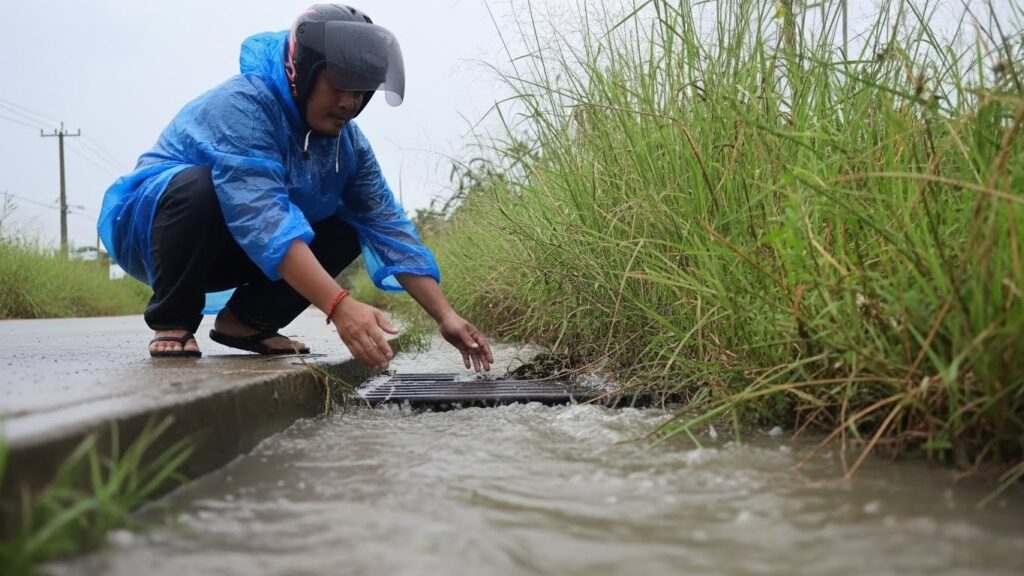
🔹 Step 1 — Expose and clear the ends
Blocking usually starts at one (or both) ends of the culvert. First, use a shovel — or even a specially designed culvert shovel if available — to dig out soil or debris around the opening. Remove loose rocks, mud, leaves, sediment or anything visible at the entrance. Clearing the mouth often releases enough pressure to let water begin to flow again.
🔹 Step 2 — Use a culvert‑cleaning tool or pole to reach inside
If the culvert is longer or the clog is deeper, a regular shovel won’t reach far enough. In that case: attach a length of metal pipe (or a long pole) to a culvert‑cleaning tool (or even a hooked wire/rod), and carefully push it into the culvert. Insert a few inches, then pull back — repeating this “push and pull” motion can dislodge accumulated silt or debris. Do this from both ends of the culvert if possible. Over time, this can clear even long culverts.
🔹 Step 3 — Flush with water pressure (if possible)
Once you’ve removed loose material or broken up compacted debris, a strong stream of water — from a hose, pump, or natural runoff — can help wash remaining sediment and dirt through the culvert and flush it clear. Many people find this especially useful when there is standing water or silt buildup.
🔹 Step 4 — Use more advanced methods if DIY fails
If manual cleaning and water flushing don’t clear the culvert — perhaps because of heavy buildup or very long pipe — then mechanical solutions may be required. Some professional-side methods include using directional drills or hydro‑vacuum / jetting equipment that can more thoroughly remove debris without damaging the pipe. These methods are more efficient and often quicker for large culverts.
💡 Extra Tips & Safety Advice
- Always inspect both ends of the culvert first — oftentimes the clog is near the entrance.
- When inserting rods, wires, or poles into the culvert, go slowly and be mindful of potential blockages. If the culvert is long and deep, visibility is limited: a hooked rod or flexible wire may help “fish” out debris. Some DIYers even use a thin wire or twine first, then pull a heavier chain or cable through.
- After clearing, run plenty of water through the culvert to flush any remaining sludge or silt.
- If there is standing floodwater, or if the debris is compacted heavily (sand, mud, roots), mechanical methods — or help from professionals — may be safer and more effective.
🎯 Why This Video & Approach Are Useful
- The video delivers clear, visual, and step‑by‑step guidance — much easier to follow than text-only instructions.
- It emphasizes simple tools and DIY‑friendly methods, making it accessible for homeowners, small landowners, or maintenance crews without heavy equipment.
- It avoids relying on chemical drain‑cleaners or corrosive substances — which are unsafe and ineffective for large outdoor pipes like culverts (chemical cleaners are mainly suited for small indoor drains).