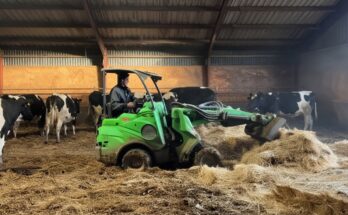
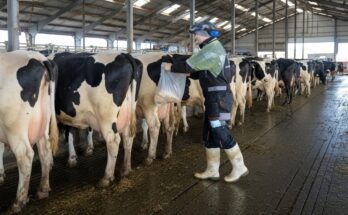
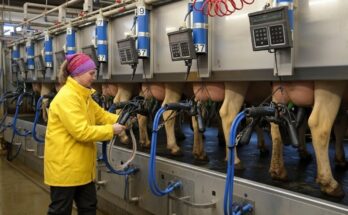
where we explore modern farming and animal care from around the world. In this episode, we take you inside a high-tech dairy farm in Denmark, focusing on a critical but often hidden aspect of cattle welfare: hoof care and hoof problem treatment.
The video starts with a close-up of a cow walking slowly, showing subtle signs of discomfort — slightly uneven gait, hesitation stepping. The narrator explains: on a dairy farm, hoof health is foundational. When a hoof is diseased or overgrown, it can lead to lameness, hurting the cow’s mobility, milk output, reproduction, and overall well-being.
We then walk you through the farm’s hoof-care station — a modern cattle crush or chute system, veterinary-grade hoof-trimming tools, hoof-tester devices, and proper safety gear for both animals and caretakers.
You’ll watch how trained hoof care professionals examine each hoof carefully, identify issues (overgrowth, sole ulcer, wall defects, misalignment), then gently trim and balance the hoof, relieve pressure points, and — if needed — apply therapeutic blocks or bandaging.
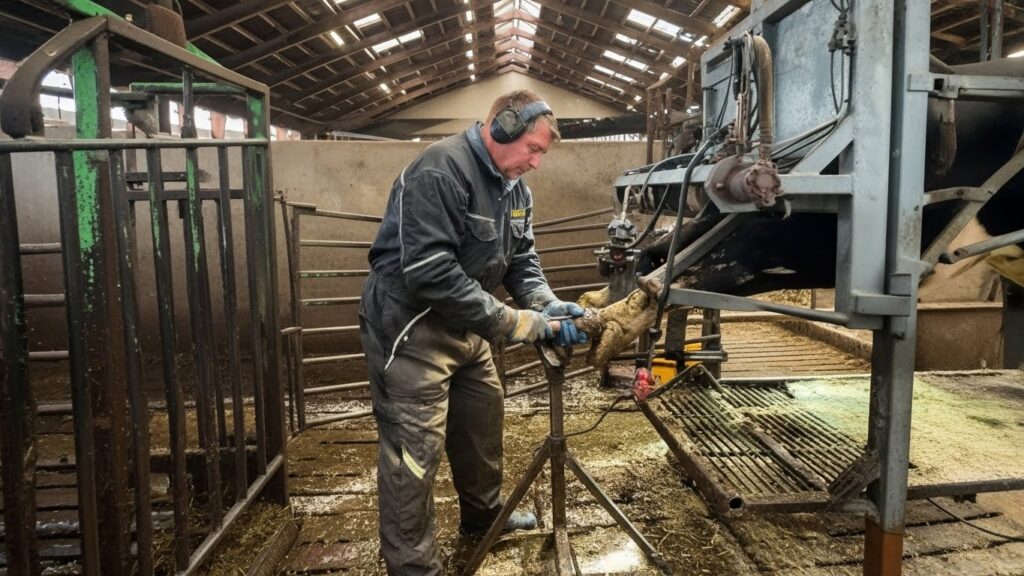
One of the key messages: hoof trimming on a regular schedule — even for healthy cows — is like a routine maintenance check/up. Just as humans need regular pedicures or dental check-ups to avoid problems, cows’ hooves grow constantly and require periodic trimming to maintain comfort and mobility.
As the video progresses, we see before-and-after clips: a lame cow limping at first, then after trimming walking evenly, stepping with confidence, even happy to move toward feed or pasture. This transformation shows how hoof care isn’t just about preventing disease — it’s about restoring quality of life for the cow and optimizing farm productivity.
We also highlight how this high-tech farm integrates hoof care into its regular herd management program: locomotion scoring, periodic hoof inspection, cleaning, trimming schedules, and proper housing and flooring — helping to prevent hoof problems before they arise.
Finally, the video closes with a broader reflection: modern dairy farming is not just about milk yield or meat output — it’s about animal welfare, longevity, and sustainability. A well-caressed hoof means a content cow, healthier herd, and better yield. If you care about ethical farming, animal care, or sustainable agriculture, this video offers a transparent, behind-the-scenes look.
If you’ve ever wondered what happens when a cow limps — or why some cows get moved to different areas — watch this video to understand what hoof care can do. It’s not glamorous, but it’s real. It’s care. It’s respect. It’s responsibility.
🎯 Who Should Watch This
- Farmers, dairy-farm managers, or aspiring cattle-farmers who want to learn modern hoof-care protocols.
- Animal-welfare advocates or consumers who want transparency on how well cows are cared for before milk or meat reaches them.
- Veterinary students or professionals interested in large-animal care and prevention of hoof disease.
- General viewers curious about modern agriculture and the behind-the-scenes care that keeps farms running.
📺 Why This Example Video Works & How You Can Use It
The video you linked (about hoof treatment on a modern farm) is a great example because:
- It shows detailed, practical hoof care — not just feeding or milking — giving a realistic view of what responsible farming involves.
- It links animal welfare with farm productivity, showing that good hoof health benefits both the herd and the farm’s bottom line.
- It builds trust and transparency: many consumers don’t know what goes on behind the barn doors — this video opens that door.
If you produce your own channel with similar content — combining technical care (hoof trimming, veterinary care, hygiene) with farm-management practices — you can attract a niche audience (farmers, vets, animal lovers) who appreciate detail and honesty.
📌 Suggestions for Your Channel / Next Videos
- Use a clear, narrative arc: problem (hoof issues) → diagnosis → treatment → recovery. It keeps viewer attention and provides clear value.
- Include before-and-after sequences — showing the cow’s gait or posture before treatment and after — powerful visual proof of improvement.
- Add voice-over explanation (or subtitles) about why hoof care matters — use data: lameness reduces milk production, shortens herd lifespan, increases vet costs.
- Consider mixing languages (English + local language) if you aim for both global viewers and local farmers (for instance, Khmer/English if you promote to Cambodia + global).
- Include farm stats (number of cows, frequency of hoof checks, incidence of hoof problems) to show scale and seriousness.
- Maybe do follow-up videos — e.g. “6-month update: herd after hoof-care program,” or “Preventive hoof care vs reactive treatment.”