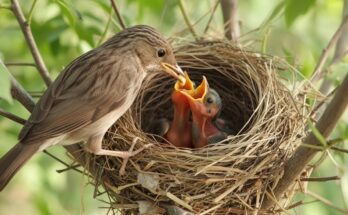
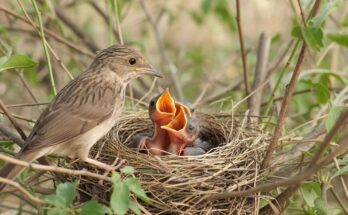
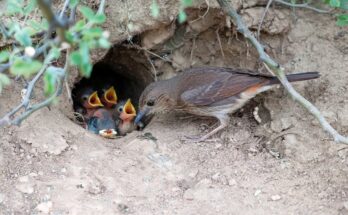
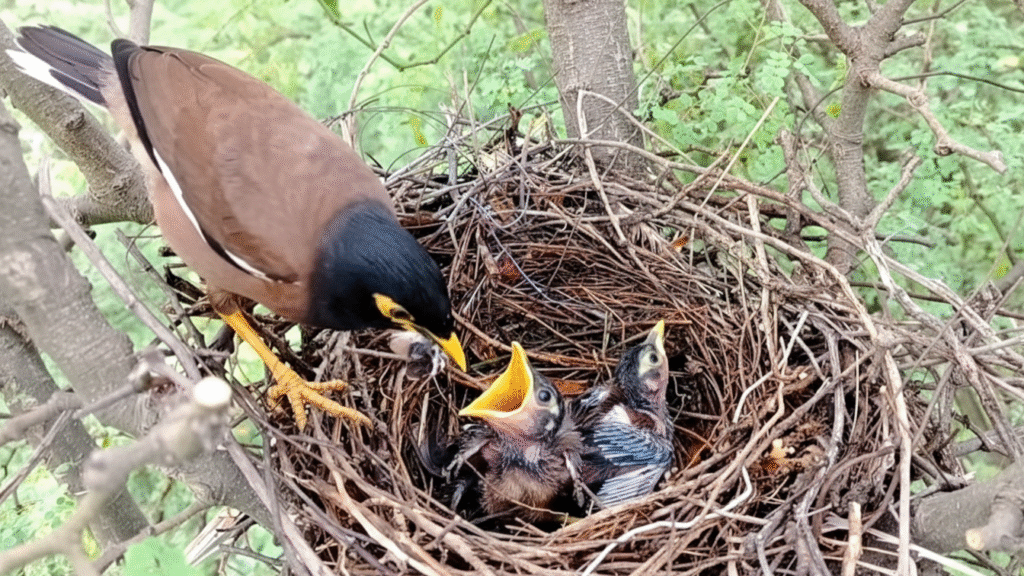
The video captures a distressing — though natural — moment: a crow preying on a baby bird from the nest of a Common myna (or “myna”) family. In the footage, the young myna chick is vulnerable in the nest, and a crow — likely Indian house crow (or a similar crow species) — seizes the opportunity, attacking and removing the baby bird. The scene illustrates the harsh reality of avian survival in nature: nestlings are easy targets for opportunistic predators like crows.
The video is a powerful reminder of predator–prey dynamics in bird communities, especially among urban and suburban settings where crows and mynas often co-exist.
🧠 Context: Why Do Crows Attack Baby Birds?
- Crows (and other corvids) are opportunistic omnivores. They often eat insects and garbage, but they do prey on eggs, nestlings, and even baby birds.
- In case of the common myna — a relatively small, cavity-nesting bird — crows may find myna nests especially accessible, making myna chicks potential targets.
- Predation by crows on nests is a documented cause of chick mortality in urban bird populations.
Because of such behavior, some consider house crows to be among the more problematic urban birds — their numbers, adaptability, and opportunistic diet allow them to thrive near human habitations, sometimes at the expense of other species.
🌍 Implications for Bird Communities & Ecology
- Reduced survival rate for smaller birds — Frequent nest predation can significantly reduce the number of fledglings for species like mynas, bulbuls, or other small urban birds. This, over time, may impact the population of those species in areas with high crow density.
- Competition & displacement — In some regions, aggressive species such as crows (or even the myna itself) compete for nesting sites, sometimes out-competing more timid native birds. For instance, mynas are already considered invasive in many parts of the world partly because of their aggressive behavior; add crow predation into the mix, and the survival pressure on native birds increases.
- Natural predation vs. human perception — While predation is part of natural ecological balance, humans often view crows as “pests,” especially when they target beloved garden birds or nestlings. That perception influences how people react (e.g., trying to defend nests, remove crows, etc.).
💡 My Reflections & Message
Watching this video evokes a mix of sadness and respect for nature’s rougher side. It’s hard to watch a baby bird — one that represents hope, new life — get hammered by a predator. Yet, it is a stark glimpse into how survival works for many birds: vulnerability, risk, instinct.
I think sharing videos like this (while upsetting) can raise awareness. It reminds us that:
- Urban birds live in a fragile balance; their lives are not guaranteed even after they hatch.
- The presence of opportunistic predators like crows affects which birds can safely nest and raise their young — a subtle but powerful force shaping urban biodiversity.
- If one cares about protecting small birds (or encouraging biodiversity), simple actions may help — e.g., planting dense shrubs, offering nesting boxes in safer/bushy places, minimizing garbage (which attracts crows), avoiding feeding crows directly.
At the same time, it’s important not to demonize crows senselessly: they are part of the ecosystem, and predation is a natural behavior.