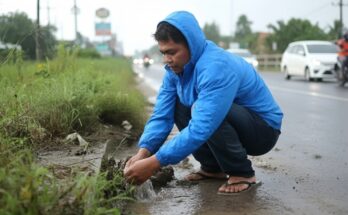
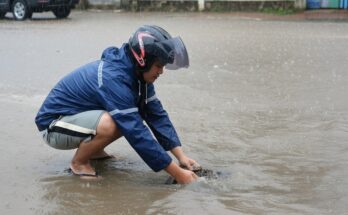
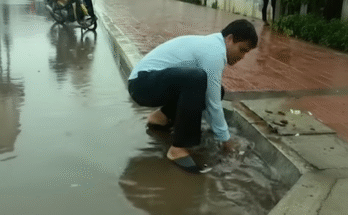
“Good Solution For Culvert Clogs Drain In City” documents a practical intervention to resolve clogged culverts and city drains — a common cause of urban flooding, poor drainage and water-logging during heavy rains or storms. The video shows how debris, trash, silt or other obstructions block culverts (underground or under-road drainage tunnels), preventing water from flowing.
It then demonstrates a step-by-step method for clearing the clog: removing trash, mud and sediment, restoring pipe flow so that stormwater can run off properly. The video emphasizes teamwork, proper tools, and cleaning both ends of the culvert to fully flush out blockages.
🌧️ Why culvert/drain cleaning matters in cities
In many cities — especially those with limited or aging drainage infrastructure — clogged culverts are a major factor behind flooding and water stagnation. Blocked drains can cause:
- Waterlogging on streets, making transportation difficult.
- Contaminated, stagnant water — which can lead to sanitation and health issues.
- Damage to roads, erosion, or seepage into foundations and underground utilities.
Thus, regular maintenance and timely unclogging of drainage systems help prevent floods, protect infrastructure, and improve urban hygiene.
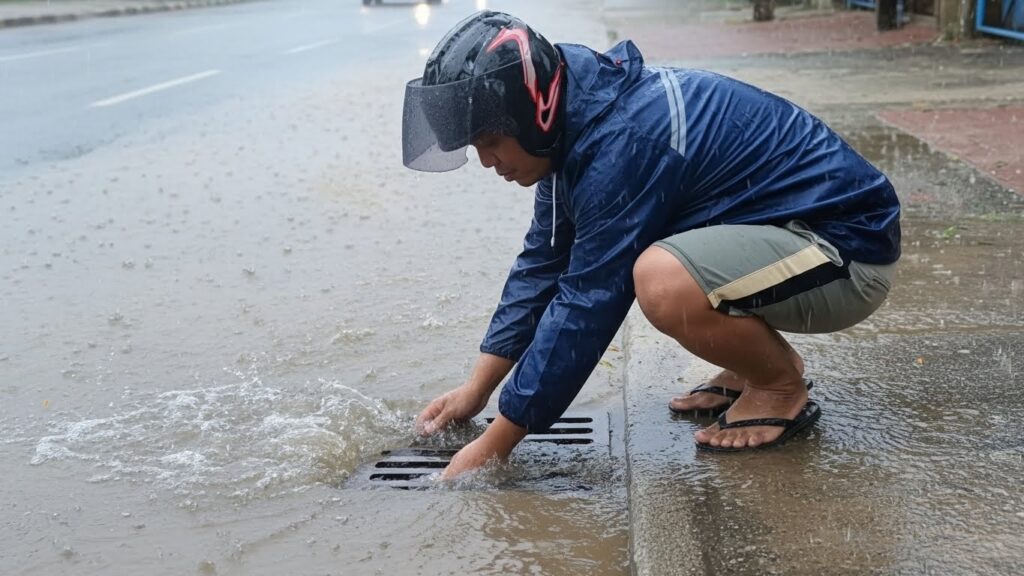
🛠️ What makes this video’s solution effective
The video’s approach is effective for several reasons:
- Comprehensive cleaning — It doesn’t just scratch the surface; it flushes through the entire culvert, removing mud, sediment, trash, and blockages so water flows freely again.
- Teamwork and coordination — Clearing large culverts often requires more than one person; working as a team significantly speeds up clearing and ensures safety.
- Proper tools and technique — Using appropriate tools (not just bare hands) and cleaning from both ends ensures the clog is fully removed, not just partially dislodged.
- Preventive mindset — By restoring drainage promptly after rainfall or visible clogging, the method helps prevent recurring flooding — which is often more effortful to fix after heavy rainfall when water levels rise and access becomes difficult.
📌 Lessons we can draw & suggestions for implementation
From the video we can derive practical lessons that any city, community, or group can apply — including in places like yours:
- Regular inspection & cleaning: Rather than waiting for a major problem after heavy rain, establishing periodic checks (e.g. after rainy season, or monthly) helps catch blockages before they cause flooding.
- Clearing both ends of culverts / drains: Debris and sediment often accumulate at entry and exit points — cleaning only one end may not restore flow.
- Community involvement: Organizing teams from local community groups, municipalities, or neighborhood associations to regularly maintain drains can be more efficient and sustainable than ad-hoc cleanups.
- Awareness & good waste management: Many clogs are caused by trash, plastic bags or waste — raising public awareness about proper waste disposal reduces clogging risk.
- Use of proper tools: Avoid bare-handed cleaning where possible; use gloves, rods, water jets or mechanical tools when appropriate, to minimize risk and improve efficiency.
🎯 Relevance & recommendation
If you live in a city (or town) where drainage is poor, rainfall is heavy, or flooding is common — the approach shown in this video is particularly relevant. It’s a realistic, low-cost, community-driven solution rather than a high-tech or expensive overhaul. For local authorities, civic groups, or residents, watching this video can be a useful starting point to understand how culvert and drain maintenance should be done.
I recommend you watch the video closely (especially how they access both ends of the culvert, remove sediments and debris thoroughly), then consider whether similar methods could be applied in your area — maybe adapt them to local conditions (size of drainpipes, typical debris, rainfall patterns).