the place to see how modern agriculture, livestock raising, and meat-processing work in 2025. In this episode, we take you deep inside a large, modern-scale Russian cow farm and its connected meat-processing factory.
We start at the very beginning: newborn calves just entering life. Watch as farmers gently guide them through their earliest hours — from first steps to early feeding and care. The video captures how each calf is carefully monitored, given proper nutrition, and raised under hygienic, well-managed conditions. Calves grow, move into bigger pens or pastures, and live under controlled environments designed to maximize their growth while ensuring health and safety.
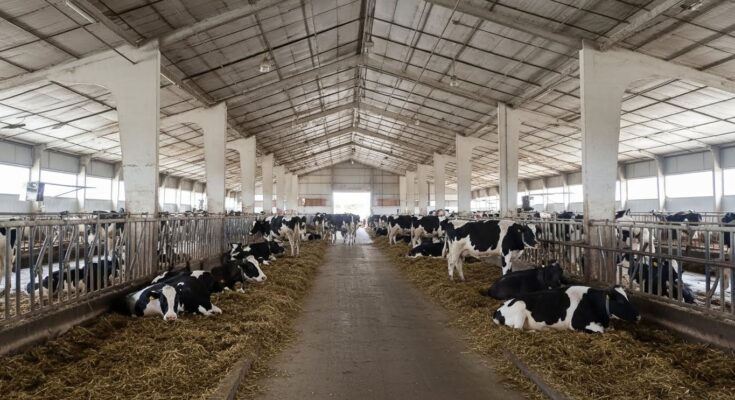
As the cows mature, the scene moves to the farm’s modern infrastructure: clean barns, automated feeding systems, ventilation and waste-management — all showing how responsible farming uses technology to maintain high standards. This isn’t the old rustic farm with open pens — this is modern agriculture where each step is tracked, and animal care is systematized.
Then comes the transition from farm to factory: where mature cows are processed into meat under strict hygiene, safety, and efficiency regulations. At the processing facility you see modern equipment, sterile environments, professional staff — ensuring meat is handled, cut, cleaned, and packed under modern industrial standards. It’s a full supply-chain walkthrough: from birth of a calf to final meat product.
Through this journey we get a clear sense of how integrated and efficient modern meat production can be: birth, growth, care, processing and packaging — all in one chain. For viewers interested in agriculture, food supply, food safety, or just curious about “where meat comes from,” this video offers an honest, unfiltered look.
But it’s not just about production. This video also underscores the responsibility that comes with modern livestock farming: animal welfare, hygienic standards, and factory-level care. When done properly, a modern cow-farm and processing plant can produce meat at scale without sacrificing basic standards — a model for responsible agribusiness.
We want our audience to see — not just hear — how much work, care, and infrastructure goes into producing beef. From tiny hoof-prints of newborn calves … to the final neatly-packaged meat on the line.
If you care about food traceability, sustainable meat, or just want to understand the realities of modern farming beyond the supermarket, this channel is for you. Welcome aboard — subscribe and join us as we explore more in-depth farming and meat-production journeys from around the world.
🎯 Who Might Want to Watch
- People curious about how industrial meat production works.
- Those interested in modern agriculture, farming technology, and animal husbandry.
- Students or professionals studying food supply chains, animal welfare, or agribusiness.
- General audience wanting transparency about where their meat comes from.
📺 Why The Example Video Works
The video you linked is a good example — it shows the entire lifecycle: from calves at birth, to raising them, to the meat-processing factory. That full “farm-to-fork” chain gives viewers a holistic view. Other similar videos (e.g. ones showing how beef cattle are raised and processed) also use this approach. 6li6.com+1
By combining on-farm footage (barns, calves, feeding, growing) with clean factory sequences (processing lines, cutting and packaging), the content becomes informative and transparent — something many people are curious about, but few see directly.
📌 Suggestions for Your Channel / Next Videos
- Use a clear narrative: birth → growth → processing → final product.
- Include dates or “2025 update” to show it’s recent and modern (since farming methods evolve).
- Add details about animal care, hygiene, regulations, and safety standards — that builds trust and transparency.
- Consider subtitles or voice-overs in multiple languages (English, Russian, maybe Khmer if you want local Southeast Asia viewers) to reach broader audience.
- Maybe do a counterpoint video — e.g. compare “traditional small-scale farm” vs “modern industrial farm” to show differences.
- Highlight ethical practices, sustainability, and welfare — many viewers appreciate responsible farming rather than generic “factory farming.”